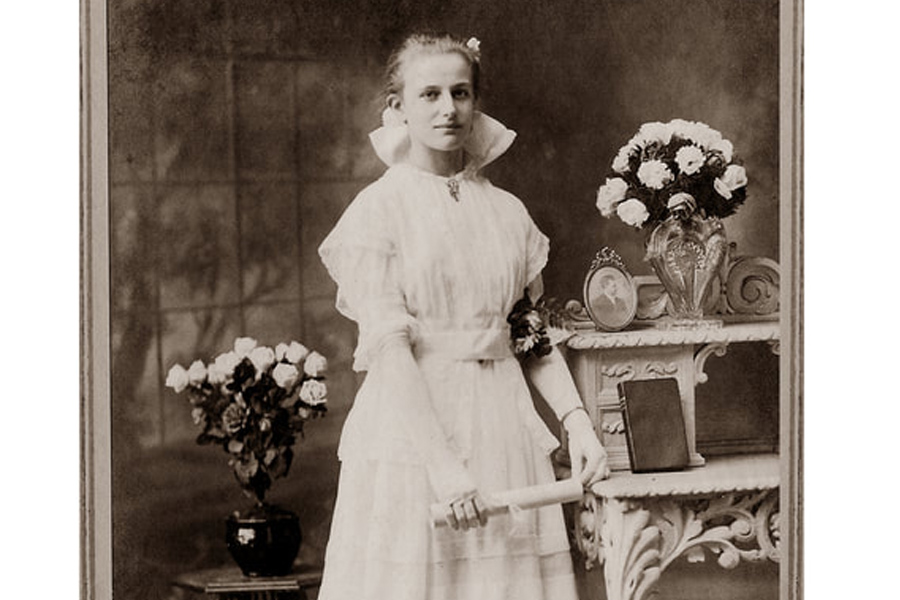
Elizabeth Walter Trump, also known as Elizabeth “Betty” Trump Walter, occupies a relatively quiet corner of one of America’s most scrutinized family histories. Born on April 30, 1904, in Morrisania in the Bronx, New York, she was the eldest surviving child of Friedrich “Frederick” Trump and Elisabeth Christ Trump. She was also the paternal aunt of Donald Trump.
Unlike her younger brother Fred Trump, who built a vast New York real estate empire, Elizabeth did not become a prominent business figure. Her life followed a different path. She worked briefly in the family’s early real estate operation, married banker William Otto Walter in 1929, raised two sons, and devoted much of her later life to church, women’s organizations, and community activities in Queens and Long Island.
Her story is valuable precisely because it is less dramatic. Behind the better-known Trump business dynasty stood family members whose lives were shaped by bookkeeping, church meetings, neighborhood organizations, household responsibilities, and the practical work of keeping a family together.
Early Life in a German American Family
Elizabeth was born into a family whose roots stretched back to Kallstadt in the Kingdom of Bavaria, now part of Germany. Her father, Friedrich Trump, had emigrated to the United States and built a varied career that included work as a barber, hotelier, and real estate investor. Her mother, Elisabeth Christ Trump, also came from Kallstadt and would later become an important figure in the family’s property business.
Elizabeth’s childhood unfolded during a period when the family was establishing itself in New York. The Trumps lived in German immigrant neighborhoods before moving toward Queens, where the family’s ambitions gradually turned toward real estate.
The family changed dramatically in 1918. Friedrich Trump died during the influenza pandemic when Elizabeth was only about 14. His estate was reported at roughly $31,000, a substantial sum for the period but modest compared with the fortunes that would eventually emerge from the family’s real estate activities.
After his death, Elisabeth Christ Trump continued the family’s business efforts. Her children were also drawn into the work. Elizabeth, still a teenager, became involved in office duties and eventually developed skills in secretarial work, bookkeeping, and accounting.
Elizabeth’s Role in the Early Family Business
Elizabeth did not build houses or negotiate large development projects. Her contribution was quieter but practical.
She left high school early to receive secretarial training and handled bookkeeping and administrative work for the family operation. At a time when family businesses often depended heavily on relatives performing multiple jobs, her organizational skills helped support the young enterprise.
Her brother Fred Trump took a much more visible role in construction and development. John George Trump, the youngest brother, eventually moved toward science and engineering. Elizabeth’s position was closer to the office desk, where accounts, correspondence, and records formed the backbone of daily business.
The family firm would eventually become associated with E. Trump & Son, but Elizabeth’s direct involvement was relatively brief. Her work illustrates an important feature of the family’s early history: the business was not initially a vast corporate machine. It was a family operation in which each member could have a practical role.
Marriage to William Otto Walter
Elizabeth wed William Otto Walter in Queens on June 16, 1929. Walter, a banker and World War I soldier, was born in 1893 and had a lengthy career in the financial sector.
Around 1910, he started out as a page boy and worked his way up the banking industry to assistant secretary at Manufacturers Trust. As Elizabeth transitioned to marriage, motherhood, church, and community service, his career gave the family a secure financial base.
Their marriage took place at a crucial moment. The Great Depression and the stock market crash occurred in 1929. Businesses had significant difficulties as a result of the economic situation, including the Trump family’s initial real estate ventures.
William and Elizabeth were active members of the Hollis Presbyterian Church while residing in Hollis, Queens. In the end, they had two sons, John Whitney Walter and William Trump Walter.
A Life Centered on Church and Community
Elizabeth’s public life was largely local. She was involved with organizations that connected families, churches, schools, and community institutions.
She served as president of the Protestant Service Organization for Creedmoor State Hospital in Queens Village. She was also associated with the Hollis Women’s Club, the Mother’s Club, the Kindergarten Mothers Club of Public School 134, and the Long Island Federation of Women’s Clubs.
Her church activities were especially important. She served as president of the Women’s League of Hollis Presbyterian Church and later became involved with the Congregational Church of Manhasset.
These organizations may seem modest compared with the world of major corporations and political institutions, but they formed the social infrastructure of suburban life. Elizabeth’s influence operated through meetings, charitable projects, church programs, and neighborhood relationships rather than headlines.
The 1946 Hollis Pantry Secrets Cookbook
One of the most charming glimpses into Elizabeth’s personality comes from a community cookbook published in 1946 by the Women’s League of Hollis Presbyterian Church.
Elizabeth contributed several recipes featuring playful names and imaginative presentations. Among them were “South Sea Island,” “Mexican Hayride,” “Snow Man,” “Sail Boats,” “Easter Eggs in Nests,” and “Circus Salad.”
These recipes reveal a different side of the woman who is otherwise documented mainly through census records, obituaries, family histories, and business references. The dishes were designed not merely as food but as small displays of creativity.
A cookbook can sometimes preserve a personality more vividly than a formal biography. In Elizabeth’s case, these recipes offer a glimpse of a woman participating in the social traditions of mid-century community life, transforming ordinary ingredients into themed dishes for gatherings and celebrations.
Her Two Sons William and John
Elizabeth and William Walter had two sons, both of whom developed notable careers.
William Trump Walter was born on December 28, 1931. He became a physicist and specialist in laser technology. He attended McBurney School and Middlebury College, graduating in 1953, and later earned a Ph.D. from MIT in 1962 under physicist Francis Bitter.
His doctoral research concerned the magnetic moment of mercury-197 and involved optical pumping. During the Korean War era, he served in the Army and taught radio repair. He later worked in early laser research and became associated with the development of copper vapor laser technology.
William also became active in civic and church affairs on Long Island. He died on April 22, 2020, at the age of 88.
His younger brother, John Whitney Walter, was born on April 17, 1934. His career followed a more direct connection to the family business.
John Whitney Walter and the Family Archives
John Whitney Walter went on to become an inventor, businessman, engineer, and devoted Trump family historian. After attending Columbia University and Norwich University, he went on to work for Trump family businesses.
He became involved with Trump properties and their operational systems and contributed to the development of payroll and billing systems. Additionally, he ran All County Building Supply & Maintenance out of the basement of his Flower Hill, Long Island, house at 511 Manhasset Woods Road.
That basement turned into a unique family history archive.
Walter kept boxes of financial documents related to Fred Trump’s companies. According to sources, the information contained over 200 tax returns pertaining to Fred Trump, his businesses, partnerships, and trusts, as well as bank statements, accounting ledgers, audits, invoices, canceled checks, and cash disbursement reports.
Instead of being an official public archive, the collection was private. However, it became crucial to subsequent inquiries into Fred Trump’s financial situation and the transfer of fortune to his offspring.
In addition, John Walter served as Flower Hill’s mayor from 1988 to 1996 before taking on the role of village historian. On January 5, 2018, he passed away.
Elizabeth’s Brother Fred Trump
Elizabeth’s brother Frederick Christ “Fred” Trump was born in 1905, one year after her. He became the best-known member of their generation of the family.
Fred expanded the family’s real estate activities and developed thousands of homes and apartments in New York City. His business eventually formed the foundation from which his son Donald Trump launched a much more public career.
Fred was the father of Maryanne Trump Barry, Fred Trump Jr., Elizabeth Trump Grau, Donald Trump, and Robert Trump.
The contrast between Elizabeth and Fred is striking. Both grew up in the same household and participated in the family’s early business environment, yet their adult lives moved in very different directions. Fred became a major developer, while Elizabeth remained primarily connected to family, church, and local civic life.
John George Trump and the Scientific Branch of the Family
Elizabeth’s younger brother John George Trump, born in 1907, followed another path altogether.
He became an electrical engineer, physicist, and MIT professor. His work included high-voltage generators, X-ray technology, and radiation research. He eventually received the National Medal of Science.
John initially had some connection to the family’s building activities, but science became his principal career. His achievements demonstrate how widely the paths of the three siblings diverged.
Elizabeth became a community-minded homemaker and former family bookkeeper. Fred became a real estate developer. John became a prominent scientist.
Their lives formed three different branches growing from the same family tree.
Elizabeth’s Later Years in Manhasset
By the late 1950s, Elizabeth and William Walter had moved from Hollis toward the Manhasset and Flower Hill area of Long Island. Their home at 511 Manhasset Woods Road later became strongly associated with their son John and the family’s records.
William Walter died on October 24, 1959. Elizabeth survived him by only about two years.
She died on December 3, 1961, at Columbia-Presbyterian Medical Center in Manhattan after a long illness with cancer. Some records give December 4 as the date of death. She was 57.
She was buried at Nassau Knolls Cemetery in Port Washington, New York.
An organ at the Congregational Church of Manhasset was later restored in her memory, providing a lasting local connection to a woman whose life had been deeply intertwined with church and community organizations.
Elizabeth Walter Trump in the Wider Trump Family
Elizabeth’s place in the Trump family tree is straightforward but historically important. She was the sister of Fred Trump and John George Trump, the daughter of Friedrich Trump and Elisabeth Christ Trump, the wife of William Otto Walter, and the mother of William Trump Walter and John Whitney Walter.
Through her brother Fred, she was the aunt of Donald Trump and his siblings.
Her sons were therefore first cousins of Donald Trump. John Walter’s later role as a keeper of family records created another connection between Elizabeth’s branch of the family and the documentary history of the Trump business empire.
Yet Elizabeth herself remained outside the center of that later public drama. She died in 1961, long before Donald Trump became a national political figure and decades before the Trump family attracted intense public scrutiny.
Why Elizabeth’s Story Matters
Elizabeth’s narrative intrigues me because it bridges the gaps between the well-known names. People who amassed fortune, achieved public office, or generated controversy often take center stage in family histories. Elizabeth’s life serves as a reminder that less obvious types of labor also contribute to the formation of families.
She maintained records. She assisted a young family company. She brought up kids. She took involved in church-related activities. She collaborated with community organizations and women’s clubs. She added dishes to a cookbook in her community. She kept up relationships in her neighborhoods.
Her life was neither a political career nor an autonomous economic enterprise. It was more personal, a thread that ran through the early decades of a family that would go on to become well-known worldwide.
Frequently Asked Questions
Who was Elizabeth Walter Trump?
Elizabeth Walter Trump, also known as Elizabeth “Betty” Trump Walter, was born April 30, 1904, in the Bronx. She was the eldest surviving child of Friedrich Trump and Elisabeth Christ Trump and the paternal aunt of Donald Trump.
What did Elizabeth Walter Trump do for a living?
Elizabeth received secretarial training and worked in bookkeeping, accounting, and office duties for her family’s early real estate business. After marriage, her life centered primarily on homemaking, church activities, women’s organizations, and community service.
Who was Elizabeth Walter Trump’s husband?
Her husband was William Otto Walter, a World War I veteran and banker. He developed a long career in banking, including work with Manufacturers Trust. They married in Queens on June 16, 1929.
How many children did Elizabeth Walter Trump have?
She had two sons, William Trump Walter and John Whitney Walter. Both became accomplished professionals, with William pursuing physics and laser research and John pursuing engineering, business, inventions, and civic leadership.
Who was John Whitney Walter?
John Whitney Walter was Elizabeth’s younger son and Donald Trump’s first cousin. He worked with Trump family businesses, became mayor of Flower Hill, New York, and maintained a large private collection of Trump family financial and business records.
What happened to John Whitney Walter’s family archives?
The records were maintained privately and were not known to have been transferred to a public archive. They included extensive financial and business documentation connected with Fred Trump’s enterprises. The publicly known disposition of the physical collection after Walter’s death in 2018 remains unclear.
When did Elizabeth Walter Trump die?
Elizabeth died on December 3, 1961, after a long illness with cancer. Some records give December 4. She was 57 years old and was buried at Nassau Knolls Cemetery in Port Washington, New York.
What was Elizabeth Walter Trump’s connection to Donald Trump?
Elizabeth was Donald Trump’s paternal aunt. Her brother Fred Trump was Donald Trump’s father, making Elizabeth the sister of Donald Trump’s father and her two sons, William and John, Donald Trump’s first cousins.
What were Elizabeth Walter Trump’s community activities?
She was active in the Hollis Presbyterian Church and several civic and women’s organizations. Her activities included leadership in the Protestant Service Organization for Creedmoor State Hospital, the Hollis Women’s Club, school mothers’ organizations, the Long Island Federation of Women’s Clubs, and the Women’s League of Hollis Presbyterian Church.
What is known about Elizabeth Walter Trump’s cookbook recipes?
Elizabeth contributed several creative recipes to the 1946 Hollis Pantry Secrets community cookbook. The recipes included “South Sea Island,” “Mexican Hayride,” “Snow Man,” “Sail Boats,” “Easter Eggs in Nests,” and “Circus Salad.” They provide an unusually personal glimpse into her community life and creativity.