Early Life in the Shadow of History
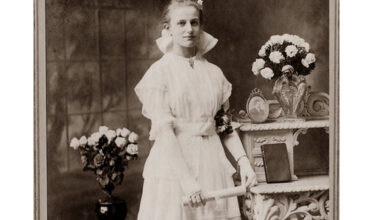
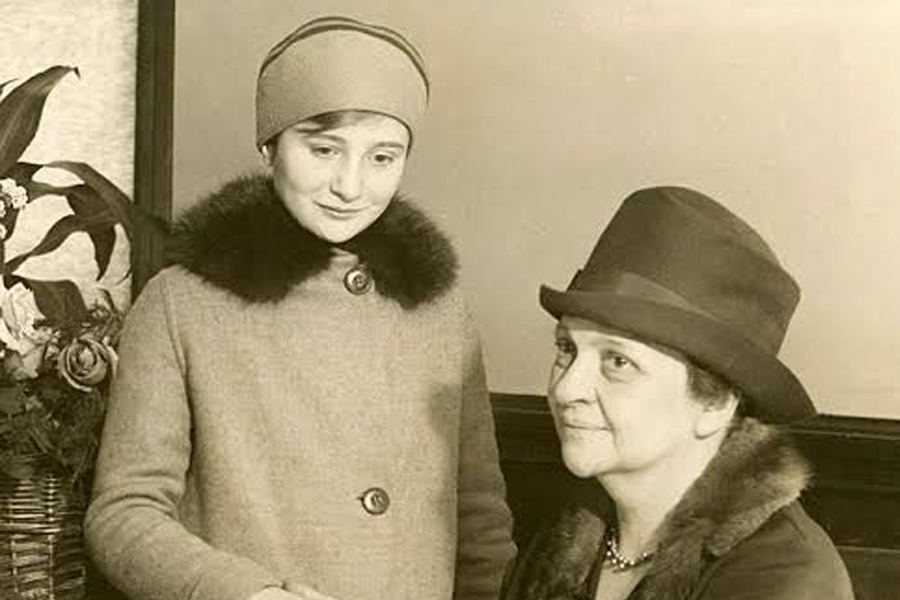
I start Susanna Wilson Coggeshall’s story on December 30, 1916, in New York City, where she was born into a family already molded by aspiration and civic service. She joined a family that would eventually become deeply ingrained in American reform as the only child of Frances Perkins and Paul Caldwell Wilson. While her father battled mental illness that threw a long and complicated shadow over their household, her mother would go on to become the first woman to serve in a US cabinet.
Her early years seem to me to be a mixture of contrasts. Her mother’s national prominence was on one side, surrounded by labor reforms, policy discussions, and the never-ending bustle of Washington life during the New Deal era. The more subdued and delicate truth of her father’s condition was on the opposite side. Susanna’s early conception of resilience was influenced by the fact that Frances Perkins became the main wage earner.
Her childhood was not limited to the metropolis. The Perkins homestead in Newcastle, Maine, served as a pillar of support for the family for many generations. Visits to this property during the summers must have been like entering a living memory, where generations’ tales reverberated through the walls.
A Family Tree Rooted in Legacy
When I trace Susanna’s lineage, I see a network of individuals whose lives stretched across centuries. Her maternal grandfather, Frederick William Perkins, maintained both a business life in Massachusetts and a strong connection to Maine. Her grandmother, Susan Bean Perkins, added another layer of New England heritage.
Even more striking is the influence of her great grandmother Cynthia Otis Perkins. Frances Perkins once described herself as deeply shaped by this figure, and I sense that this influence trickled down to Susanna as well. The Brick House in Newcastle, built in 1837, stood not just as a structure but as a symbol of continuity. It carried stories of early American life, from colonial times to the Revolutionary era.
This family history was not abstract. It was lived, preserved, and eventually passed into Susanna’s care.
Education and Early Independence
In the 1930s, I picture Susanna as a young woman navigating her own path while her mother served as Secretary of Labor. She attended college briefly but chose not to remain. Instead, she stepped into the working world through an art gallery job around 1937.
That decision feels significant to me. It suggests a desire to carve out an identity beyond politics and public service. The art world offered a different rhythm, one shaped by creativity rather than legislation. It was her first step toward independence, even if her life would remain closely tied to her family’s legacy.
Marriage and Personal Transitions
Susanna’s personal life unfolded through two marriages that reflected different chapters of her journey. On March 12, 1938, she married David Meredith Hare, a Manhattan photographer known for his work in color photography. Their union placed her within a creative social circle, yet the marriage ended in divorce in 1945.
Years later, in 1953, she married C. Calvert Coggeshall, an abstract painter and designer. This relationship appears to have brought greater stability. They shared nearly four decades together until his death in 1990. Through him, Susanna’s connection to the art world deepened, and she became part of a creative environment that blended Maine’s quiet landscapes with New York’s artistic energy.
Motherhood and a Renewed Connection
On September 25, 1954, Susanna gave birth to her only child, Tomlin Perkins Coggeshall. His name honored a friend of his father, the painter Bradley Walker Tomlin. For me, this moment marks a turning point.
Sources suggest that her relationship with her mother improved somewhat around this time. The arrival of a child often reshapes family dynamics, and I see this as a moment when distance softened, even if it never fully disappeared. The bond between Susanna and Frances Perkins remained complex, marked by periods of closeness and estrangement.
Tomlin would later become a central figure in preserving the family legacy, caring for his mother in her later years and championing the preservation of the homestead.
Life at the Newcastle Homestead
After Frances Perkins died in 1965, the Newcastle property passed to Susanna. I think of this transition as both an inheritance and a responsibility. The homestead was more than land. It was a repository of memory.
Susanna spent much of her later life there. The house, surrounded by Maine’s coastal quiet, became the setting for her final decades. In the mid 1990s, her son Tomlin and his husband moved in to help care for her, transforming the home into a shared space of support and continuity.
This period of her life feels grounded and reflective. While she never pursued a high profile public career, she contributed in quieter ways. She donated family papers and photographs to archives, ensuring that the story of Frances Perkins and their family would endure. She also participated in oral history interviews between 1990 and 1992, offering personal insights that enriched the historical record.
Public Appearances and Historical Presence
Despite her lack of desire for attention, Susanna made appearances at significant historical junctures. On April 10, 1980, President Jimmy Carter named the Department of Labor building in Frances Perkins’ honor, which was one of the most significant events. Susanna and her son went to the event.
Her presence there seems symbolic to me. She served as a link between the generations who would carry on the legacy of significant labor reforms and the past.
Additionally, there were subtle connections between her life and art. In Maine, she and her second husband were photographed by Walker Evans. A peek of her world is captured in these photos, which combine artistic expression with daily life.
Final Years and Passing
Susanna Wilson Coggeshall spent her final years at the Newcastle homestead. On April 24, 2003, she died at the age of 86. Her burial in Glidden Cemetery placed her among the landscapes that had shaped her family for generations.
A service at St. Patrick’s Church in Newcastle marked her passing. She was survived by her son and stepchildren, leaving behind a family that continued to carry forward the Perkins name and its historical significance.
A Life Reflected Through Family
When I reflect on Susanna’s life, I do not see a conventional narrative of public achievement. Instead, I see a life that functioned like a thread woven through a larger tapestry. She was the daughter of a pioneering reformer, the mother of a preservationist, and the steward of a historic home.
Her contributions were often quiet. They appeared in archives, in photographs, in memories preserved through interviews. Yet these contributions ensured that a vital chapter of American history remained accessible.
FAQ
Who was Susanna Wilson Coggeshall
Susanna Wilson Coggeshall was the only child of Frances Perkins, the first woman to serve in a United States Cabinet. She lived from 1916 to 2003 and is known primarily through her family connections and her role in preserving her mother’s legacy.
What was her connection to Frances Perkins
She was Frances Perkins’s daughter. Their relationship was complex, with periods of estrangement, though there were moments of renewed connection later in life.
Did Susanna Wilson Coggeshall have children
Yes, she had one biological child, Tomlin Perkins Coggeshall, born in 1954. He later played a key role in preserving the family homestead and legacy.
What was the Newcastle homestead
The Newcastle homestead was a historic family property in Maine that had been in the Perkins family for generations. It later became associated with the Frances Perkins National Monument.
Did she have a career of her own
She did not have a widely documented public career. She worked briefly in an art gallery and remained connected to the art world through her second husband. Her contributions were primarily through family preservation and archival donations.
When did she pass away
She died on April 24, 2003, at the age of 86, at the family home in Newcastle, Maine.