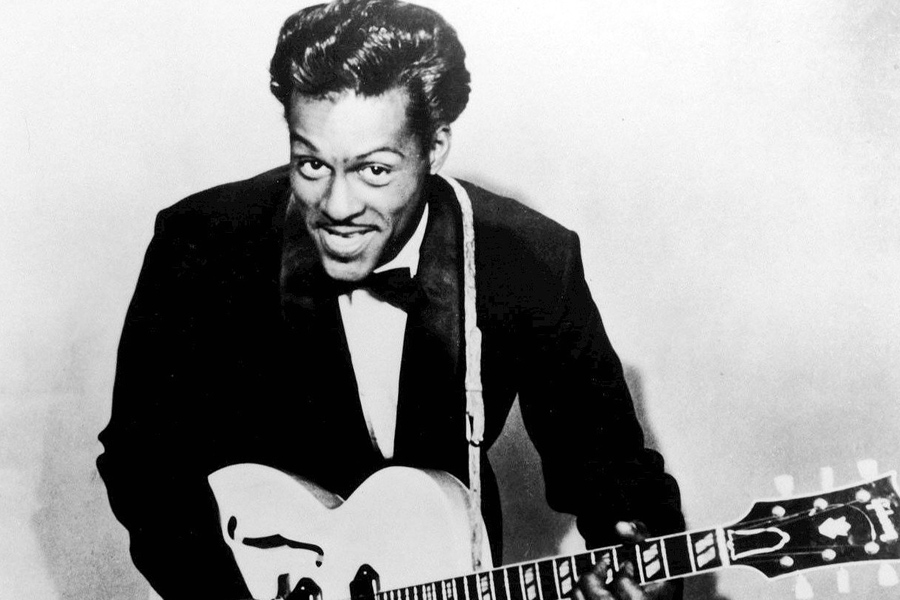
When I think about the birth of rock and roll, one name always rises above the noise. Chuck Barry, more commonly known to history as Chuck Berry, transformed American popular music with a guitar in his hands, stories in his lyrics, and an unforgettable stage presence. His life stretched from October 18, 1926, to March 18, 2017, covering decades of musical evolution while leaving fingerprints on every generation that followed.
His journey was not simply about hit songs. It was also about family, determination, setbacks, redemption, and a remarkable ability to turn everyday experiences into timeless music. Looking at his story, I see someone whose influence spread like ripples across a lake, touching artists, audiences, and even his own children.
Early Life Shaped by Family and Faith
Chuck Barry was born Charles Edward Anderson Berry in St. Louis, Missouri, on October 18, 1926. He was the fourth of six children born to Henry Berry and Martha Berry. His father worked as a contractor and served as a Baptist church deacon, while his mother was one of the area’s few certified African American public school principals.
Growing up in The Ville, a thriving middle class Black neighborhood, gave him a stable environment during an era marked by racial segregation. Music surrounded him from an early age. Church choirs filled Sundays with gospel harmonies, while blues, country, and jazz poured from household radios throughout the week.
As a student at Sumner High School, he discovered that performing brought him confidence. One memorable talent show performance introduced classmates to his energetic interpretation of “Confessin’ the Blues.” That early appearance hinted at the entertainer he would eventually become.
Life, however, quickly became complicated. In 1944, at only 17 years old, Barry became involved in an armed robbery with two friends. He was convicted and spent approximately three years in a Missouri reformatory before earning release on good behavior on his twenty first birthday in 1947.
Building a Future After Prison
Freedom offered Barry another chance. Rather than giving up, he pursued multiple careers while keeping music alive.
He worked in an automobile factory, studied cosmetology at Poro College, cleaned buildings as a janitor, and even worked as a photographer. Every paycheck helped support his growing family while allowing him to perform at local nightclubs during evenings.
This period demonstrated the work ethic that remained part of his personality throughout life. Music did not arrive through overnight success. It grew alongside ordinary jobs, long hours, and persistent ambition.
By 1953, Barry had joined pianist Johnnie Johnson’s trio. Their performances blended blues, country, and rhythm and blues in ways audiences had not heard before. That creative partnership became the launching point for one of music’s greatest careers.
The Breakthrough That Changed Music
Everything changed in 1955.
After meeting blues legend Muddy Waters in Chicago, Barry received advice that led him to Chess Records. During his very first recording session, he introduced “Maybellene,” a fresh adaptation of the country tune “Ida Red.”
The record became an enormous success. It reached the top of the rhythm and blues charts while climbing into the national pop rankings.
More classics followed in rapid succession.
| Year | Song | Career Impact |
|---|---|---|
| 1955 | Maybellene | Breakthrough national hit |
| 1956 | Roll Over Beethoven | Established rock identity |
| 1957 | Rock and Roll Music | Became an enduring anthem |
| 1957 | School Day | Celebrated teenage culture |
| 1958 | Sweet Little Sixteen | Inspired later generations |
| 1958 | Johnny B. Goode | One of rock’s defining songs |
These recordings refined rhythm and blues into something faster, sharper, and more accessible. His lyrics focused on school, cars, romance, and youthful dreams, subjects that connected instantly with teenage listeners.
Musical Style That Created a Blueprint
Barry’s ability to combine a variety of musical traditions into a single, identifiable sound is what most strikes me about him.
He was a fan of Muddy Waters’ potent blues, T Bone Walker’s guitar skills, Louis Jordan’s storytelling, and Nat King Cole’s silky vocals. Additionally, country music was crucial, especially in the development of songs like “Maybellene.”
His guitar tunes became instantly identifiable. Each album has a distinct personality thanks to double pauses, upbeat solos, and catchy openings.
His exuberant “duck walk,” a lighthearted stage maneuver that became a hallmark of rock music performances, was equally well-known.
Instead of imitating his influences, Barry blended them to create something entirely new. His compositions served as links between rhythm and blues, jazz, country, and blues.
Marriage and Family Life
Away from the spotlight, Barry built a remarkably long marriage.
He married Themetta “Toddy” Suggs in October 1948. Their relationship lasted nearly sixty nine years until his death in 2017.
Toddy largely avoided public attention, yet she remained a constant source of support during decades filled with worldwide tours, legal battles, financial success, and changing musical trends. Barry later dedicated his final studio album, Chuck, to her.
Together they raised four children.
Ingrid Berry
Born on October 3, 1950, Ingrid Berry became the family’s most visible musical collaborator.
She performed vocals and harmonica alongside her father during his regular appearances at Blueberry Hill in St. Louis. She also contributed to his final album and frequently shared memories about growing up with one of rock’s biggest pioneers.
Charles Berry Jr.
Charles Berry Jr. followed directly in his father’s musical footsteps.
An accomplished guitarist, he regularly joined Chuck Barry on stage during later tours and Blueberry Hill performances. His playing preserved many of his father’s classic arrangements while introducing them to newer audiences.
Melody Exes Berry Eskridge
Melody has generally maintained a quieter public profile. Nevertheless, she has participated in family celebrations, museum exhibits, and legacy events honoring her father’s achievements.
She remains an important representative of the Berry family as interest in Chuck Barry’s career continues to grow.
Aloha Berry
Aloha Berry has stayed almost entirely outside public attention.
Although little has been publicly documented about her personal life, she remains one of Barry’s surviving children and continues to be recognized during family tributes and commemorative events.
Career Challenges and Remarkable Comebacks
Barry’s life was never without controversy.
Between 1959 and 1962, legal problems involving the Mann Act interrupted his rapidly growing career. After serving prison time, he returned to recording during the early 1960s with songs including “Nadine,” “No Particular Place to Go,” and “You Never Can Tell.”
The British Invasion actually strengthened his reputation.
Groups such as The Beatles and The Rolling Stones openly admired his songwriting and frequently performed his music. Their success introduced Barry’s catalog to millions of additional listeners worldwide.
Another major commercial achievement arrived in 1972 when “My Ding A Ling” became his only Billboard Hot 100 number one single.
Awards and Lasting Recognition
Barry accumulated honors across several decades.
Some of his most notable achievements include:
| Year | Recognition |
|---|---|
| 1984 | Grammy Lifetime Achievement Award |
| 1986 | Charter member of the Rock and Roll Hall of Fame |
| 1987 | Publication of his autobiography |
| 1987 | Release of Hail Hail Rock n Roll documentary |
| 2000 | Kennedy Center Honors |
| Various Years | Inclusion among the greatest artists and guitarists in music history |
Perhaps no recognition symbolizes his influence more than the inclusion of “Johnny B. Goode” on the Voyager Golden Record, allowing his music to travel beyond Earth itself.
Business Success Beyond Music
Barry understood business almost as well as music.
He insisted on receiving cash payments before performances, controlled much of his publishing through Isalee Music, and invested heavily in Missouri real estate.
One of his major properties became Berry Park near Wentzville.
Because he retained ownership of valuable songwriting rights, his estate continued generating substantial income after his death. Estimates of his wealth have varied widely, ranging from approximately 10 million dollars to significantly higher values once publishing rights and real estate holdings are considered.
Final Years and Continuing Legacy
In 2016, Barry shocked fans by revealing his first studio album in decades on his ninetieth birthday.
Ingrid Berry and Charles Berry Jr. were among the family members featured on the album Chuck. On March 18, 2017, he tragically died at home in Missouri from cardiac arrest prior to its release.
His family made sure that his last musical message was heard by people all throughout the world by helping to finish and market the CD.
Exhibitions, performances, archival releases, and anniversary festivities continue to pay tribute to his extraordinary career as his 100th birthday draws near in October 2026. Younger generations are exposed to the music that shaped rock and roll through new initiatives like live recordings and museum exhibits.
FAQ
Who was Chuck Barry?
Chuck Barry, historically known as Chuck Berry, was an American singer, songwriter, and guitarist born on October 18, 1926. He became one of the most influential founders of rock and roll through songs such as “Maybellene,” “Johnny B. Goode,” and “Roll Over Beethoven.”
Who were Chuck Barry’s parents?
His parents were Henry Berry, a contractor and Baptist church deacon, and Martha Berry, a certified public school principal. Their encouragement and strong educational values shaped his early development.
Who was Chuck Barry’s wife?
He married Themetta “Toddy” Suggs in October 1948. Their marriage lasted nearly sixty nine years and continued until his death in 2017.
How many children did Chuck Barry have?
He had four children: Ingrid Berry, Melody Exes Berry Eskridge, Charles Berry Jr., and Aloha Berry.
Which family members performed music with him?
His daughter Ingrid Berry and son Charles Berry Jr. regularly appeared alongside him during concerts, especially at Blueberry Hill in St. Louis, and both contributed to his final album.
What made Chuck Barry’s music unique?
He combined blues, country, rhythm and blues, and jazz into energetic songs filled with memorable guitar riffs, vivid storytelling, and relatable themes about youth, cars, school, and romance.
What was Chuck Barry’s biggest commercial hit?
“My Ding A Ling,” released in 1972, became his only Billboard Hot 100 number one single, although songs like “Johnny B. Goode” remain his most influential recordings.
What is Chuck Barry’s lasting legacy?
His songwriting, guitar style, and stage performances created the blueprint for rock and roll. His music continues to inspire artists across multiple generations while his family actively preserves and celebrates his extraordinary legacy.