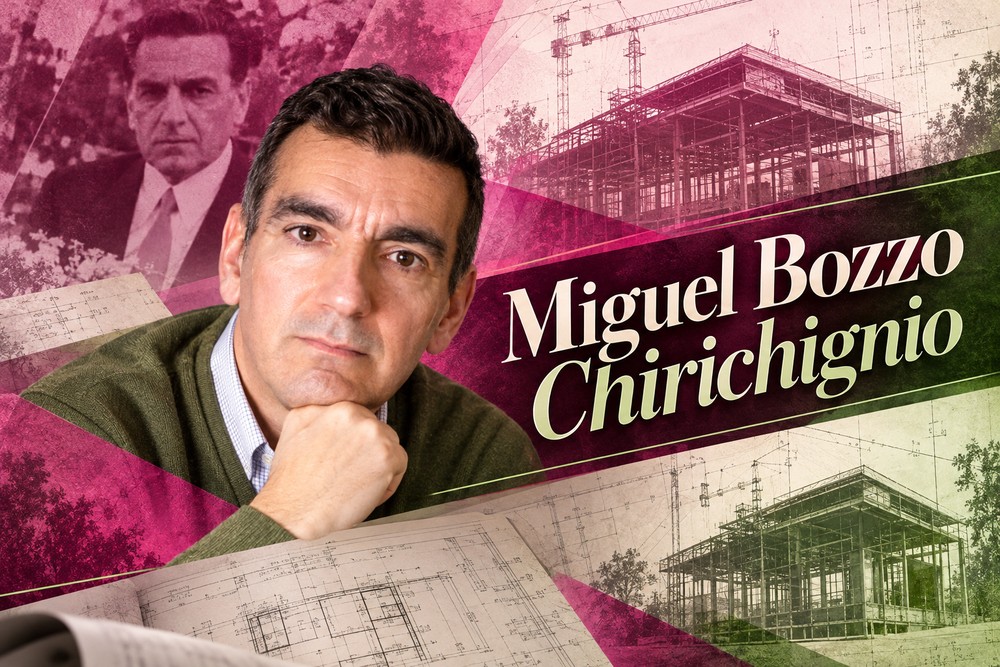
Basic Information
| Field | Details |
|---|---|
| Full name | Miguel Bozzo Chirichignio |
| Also known as | Miguel Manuel Bozzo Chirichigno |
| Birth | April 11, 1920, Lima, Peru |
| Death | January 6, 2006, Lima, Peru |
| Nationality | Peruvian |
| Heritage | Peruvian with Italian and Spanish family roots |
| Parents | Juan Bozzo Olcese and Gerarda María Chirichigno |
| Spouse | Victoria Luisa Rotondo Mendoza |
| Marriage | August 3, 1950, La Punta, Callao |
| Children | Laura Cecilia, Luis Miguel, Juan Miguel Roberto, Miguel Roberto, Susana Liliana |
| Grandchildren | Alejandra de la Fuente, Victoria De La Fuente Ayers, among others |
| Field | Civil and structural engineering |
| Academic roles | Emeritus Professor and Dean of Civil Engineering, Universidad Nacional de Ingeniería (UNI) |
| Leadership | President of ENACE, Empresa Nacional de Edificaciones |
| Notable work | Co-author of Losas reticulares mixtas: Proyecto, análisis y dimensionamiento |
| Residence | Lima, Peru |
Early Life and Heritage
On April 11, 1920, Miguel Bozzo Chirichignio was born in Lima into an Italian-Spanish family that influenced Peruvian life. His parents, Juan Bozzo Olcese and Gerarda María Chirichigno, instilled discipline, study, and Catholic values in their close-knit household. This cultural blend shaped his personal and professional style: precise, meticulous, and service-oriented.
By the late 1940s, he had decided to pursue civil and structural engineering, which was rapidly modernizing in Peru. He was taught in a generation that computed using a slide rule and intuition, and structural analysis was as much art as arithmetic. These formative years prepared him for a career that would shape classrooms, building sites, and the national discourse about how Peru built.
Marriage, Family, and a Lineage of Achievement
Bozzo married Victoria Luisa Rotondo Mendoza at La Punta, Callao, on August 3, 1950. Victoria’s family was involved in fishing, and her brother Roberto Rotondo became a pastor. Bozzo and Rotondo families combined technical expertise, enterprise, and public participation.
Five children were raised in Lima. The eldest, Laura Cecilia, was born in the early 1950s and became a lawyer and popular Latin American TV host. Luis Miguel, born in 1961, excelled in engineering and co-authored technical works with his father. Juan Miguel Roberto and Miguel Roberto continued the Bozzo name and family networks, while Susana Liliana became a fond historian of her father’s character and Italian ancestry.
Alejandra de la Fuente and Victoria de la Fuente Ayers, Laura’s granddaughters, look modern for a mid-century Lima family. The family moves from classes and construction designs to studios and entrepreneurship through weddings, careers, and public life.
Academic and Professional Trajectory
Miguel Bozzo worked at design offices, lecture halls, and national institutions. At the Universidad Nacional de Ingeniería in Lima, he became Dean of the Faculty of Civil Engineering and eventually Emeritus Professor. Many previous pupils remember him as a skilled calculista and structural analyst who could simplify complicated problems.
His leadership went beyond academia. Bozzo led large-scale public projects as president of ENACE, the state building enterprise, when urban expansion required homes, schools, and civic infrastructure. Engineers have to consider systems, budgets, and people. His skill allowed him to draw a line on a design and visualize the neighborhood it would improve.
Engineering Focus and Innovation
Bozzo specialized in structures that require meticulous calculation, especially reinforced concrete systems and mixed grid slabs. His technical fingerprints can be found in the methods, checks, and design philosophies adopted by Peruvian engineers in the late twentieth century. He worked across:
- Reinforced and prestressed concrete design
- Structural systems for wide-span floors and housing projects
- Mixed grid slabs for economic and efficient structural performance
- Codification, design checks, and safe detailing practices
He and his son, Luis M. Bozzo Rotondo, wrote Losas reticulares mixtas: Proyecto, análisis y dimensionamiento, a practical and analytical guide that is still used in the field. His family and colleagues recall his patents and intellectual property talks related to structural advances.
Timeline of Key Milestones
| Year or Period | Event |
|---|---|
| 1920 | Born in Lima on April 11 |
| 1940s to 1950 | Begins formal work in civil and structural engineering |
| 1950 | Marries Victoria Luisa Rotondo Mendoza on August 3 in La Punta, Callao |
| 1951 to 1952 | Birth of daughter Laura Cecilia |
| 1950s to 1960s | Professional reputation grows as a structural calculator and designer; family expands |
| 1961 | Birth of son Luis Miguel |
| 1970s to 1980s | Serves as Dean of Civil Engineering at UNI; assumes leadership roles in national projects |
| 1980s | Presidency at ENACE, overseeing public building initiatives |
| 1990s to early 2000s | Publishes with son Luis on mixed grid slabs; active in teaching and technical development |
| 2006 | Dies on January 6 in Lima at age 85 |
| 2008 | Death of spouse, Victoria Luisa Rotondo Mendoza |
| 2010s to 2020s | Ongoing tributes from children and recognition within engineering circles |
Selected Works and Topics
| Category | Example or Focus | Notes |
|---|---|---|
| Book | Losas reticulares mixtas: Proyecto, análisis y dimensionamiento | Co-authored with Luis M. Bozzo Rotondo; design and analysis guide for mixed grid slabs |
| Teaching | Structural analysis and design courses at UNI | Emphasis on rigorous calculation and practical detailing |
| Leadership | ENACE projects | Public buildings and housing, prioritizing efficient structural systems |
| Innovation | Patents and IP activity | Associated with structural methods and construction approaches |
The Teacher and the Calculator
In the classroom, Bozzo was renowned for a methodical approach. He favored clear free-body diagrams, conservative detailing, and an insistence on verifying results by independent checks. Students recall a disciplined cadence to his lectures:
- Define load paths and governing actions.
- Reduce ambiguity through modeling and limit-state analysis.
- Verify with alternate calculations and ensure detail consistency.
- Design for constructability and quality control.
This pedagogy created engineers who could both design and explain their designs, a hallmark of the best professional training. The ethos seeped into his administrative work too, as he prioritized standards, mentorship, and the elevation of the profession.
Family Ties and Public Presence
Miguel’s family reflected his legacy while he worked in engineering. Laura’s TV success catapulted Bozzo to living rooms outside Peru. Susana described him as a gentleman of old Lima who was respectful and meticulous. Through mathematics and the smell of fresh concrete, Luis’s technical publications and PhD training connected generations of engineers.
The Rotondo connection added a dimension of entrepreneurship and public service, reinforcing the image of a family that negotiates both private excellence and civic duty. In each child’s path, there is a trace of the father’s insistence on preparation, perseverance, and pride in craft.
Remembrance and Ongoing Influence
Bozzo’s legacy lives on in classrooms, professional forums, and family stories since his 2006 death. Many Peruvian engineers view him as a mid- to late-20th-century benchmark. His children and grandchildren see him as the quiet creator of opportunities, teaching from photos and well-used textbooks.
The structures he designed are more than beams and slabs. They are idea and integrity structures. Each time a young engineer double-checks a moment diagram or a faculty council debates safety and economy norms, his work continues. When family members remember him as a lovely, great person and grandchildren perceive the city as a living entity that needs attentive bones, it continues.
FAQ
Who was Miguel Bozzo Chirichignio
A Peruvian civil and structural engineer born in 1920, he became an Emeritus Professor and dean at UNI and served as president of ENACE.
What are his most notable achievements
He led UNI’s civil engineering faculty, guided public works through ENACE, and co-authored a reference on mixed grid slabs.
When was he born and when did he die
He was born on April 11, 1920, and died on January 6, 2006.
Where did he work and teach
He worked primarily in Lima and taught at the Universidad Nacional de Ingeniería.
What is ENACE
ENACE is the Empresa Nacional de Edificaciones, Peru’s state building enterprise for public projects.
What book did he co-author
Losas reticulares mixtas: Proyecto, análisis y dimensionamiento, focused on design and analysis of mixed grid slabs.
Who was his spouse
He married Victoria Luisa Rotondo Mendoza on August 3, 1950, in La Punta, Callao.
How many children did he have
He had five children: Laura Cecilia, Luis Miguel, Juan Miguel Roberto, Miguel Roberto, and Susana Liliana.
Is he related to television host Laura Bozzo
Yes, Laura Bozzo is his daughter.
Who are his known grandchildren
Among his grandchildren are Alejandra de la Fuente and Victoria De La Fuente Ayers.
What is known about his heritage
He descended from Italian and Spanish families and was raised in Lima within a Catholic household.
How is he remembered today
Through engineering education and practice in Peru, family tributes, and the ongoing relevance of his technical work.